
About LNG
Liquefied natural gas (LNG) is natural gas cooled to approximately −162°C, at which point it becomes a liquid and occupies about one six-hundredth of its volume as a gas. This reduction makes it practical to store LNG in insulated tanks and transport it by sea, connecting producing regions with markets beyond the reach of pipeline networks.
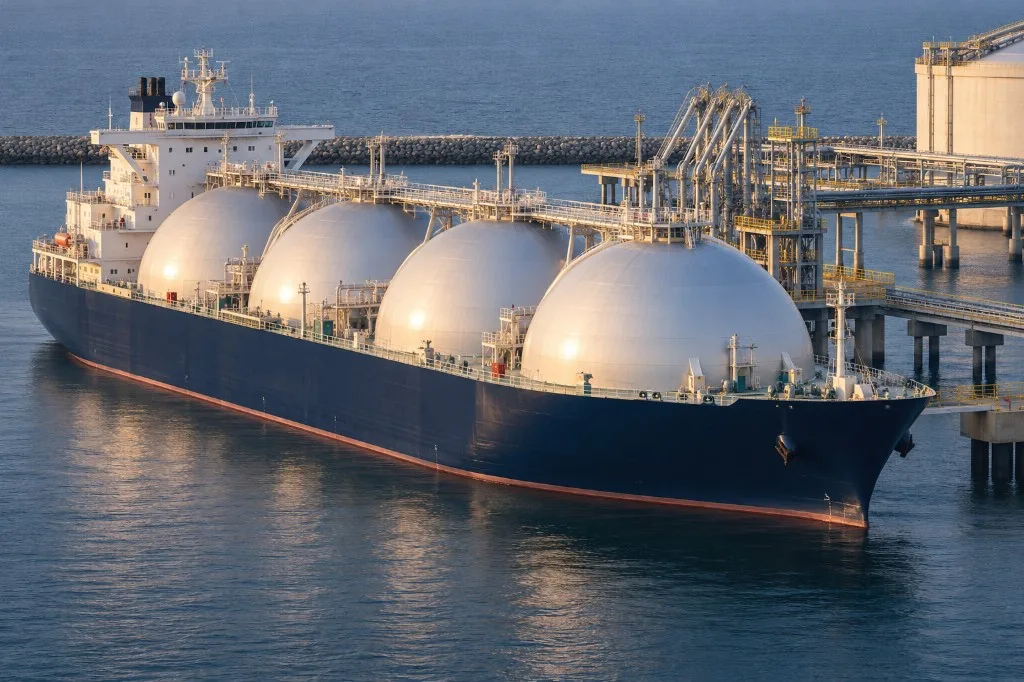
At export terminals, natural gas is liquefied, stored, and loaded onto specialised LNG carriers. At the receiving terminal, the cargo is unloaded into insulated storage tanks. The LNG is then warmed back into gas through regasification and fed into the pipeline network to supply power stations, industrial facilities, and local gas distribution networks. Vessel schedules and terminal availability play an important role in coordinating each delivery.
In physical LNG trading, the parties agree on the cargo quantity, quality specifications, pricing basis, delivery point, and loading or discharge window. Gas composition and calorific value matter because they affect both the energy a cargo delivers and its compatibility with the receiving market’s gas quality requirements. At loading or discharge, cargo measurements and representative samples are used to determine the total energy transferred. That figure provides the basis for commercial settlement.